
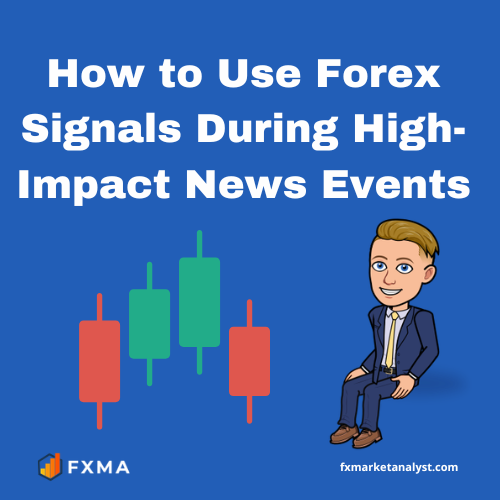
Discover how to use forex signals effectively during high-impact news events like NFP and interest rate decisions. Learn when to trade, when to pause, and how to manage risk.
Every forex trader has experienced it, you open a position based on a solid signal, and then a major news release sends the market flying in the opposite direction. High-impact news events are among the biggest challenges for signal-based traders. They can wipe out gains in seconds or, if approached correctly, create some of the best opportunities of the week.
How to Use Forex Signals During High-Impact News Events
Let's break it down.
What Counts as a High-Impact News Event?
Not all economic data releases are equal. High-impact events are those that consistently move the market sharply and unpredictably. The most significant ones include:
- Non-Farm Payrolls (NFP) — released on the first Friday of every month
- Central bank interest rate decisions — from the Fed, ECB, BoE, and others
- Consumer Price Index (CPI) — inflation data that directly influences monetary policy
- GDP releases — quarterly growth figures for major economies
- Unemployment claims and PMI data
These events are marked on every economic calendar with a red or high-impact label. If you trade with forex signals, you need a clear plan for how to handle them.
Why News Events Create Problems for Signal Traders
Forex signals are generated based on technical analysis, price structure, or algorithmic models. The problem is that none of these can predict what a central bank will say or whether jobs data will come in above or below expectations.
When a high-impact event hits, markets can move 50–150 pips in seconds. Spreads widen dramatically. Slippage becomes common. Stop losses may not execute at the expected price.
The signal may have been perfect before the news. But the news changed everything.
4 Strategies for Using Signals Around News Events
- Pause Signals Before the Release
The simplest and safest approach is to avoid entering new trades in the 30–60 minutes before a major release. Check the economic calendar every morning. If NFP or an interest rate decision is scheduled, hold off on taking any new signal entries until the dust settles.
- Close or Reduce Existing Positions
If you already have an open trade when a high-impact event is approaching, consider closing it or reducing your position size. Many experienced traders take partial profits before a news event to lock in gains and reduce exposure. A good signal brought you into the trade — protecting those profits is smart trading, not defeat.
- Wait for the Post-News Signal
After a major release, price often creates a sharp spike followed by a retest or continuation. Many quality signal providers update their alerts after news events, identifying new setups that align with the post-release direction. Waiting for this clarity is often more profitable than trying to trade into the chaos.
- Use Signals to Confirm the News Direction
If the news is bullish for a currency and your signal already points in that direction, that alignment is a strong confirmation. News + technical signal agreement gives you higher conviction. You can consider entering after the initial spike has settled, once the price shows structure again.
Risk Management Is Non-Negotiable During News Events
Even the best signal becomes dangerous without proper risk management around high-impact news. A few rules to always follow:
- Never risk more than 1–2% of your account on a single trade during a news period
- Widen your stop loss slightly to account for increased volatility and spread widening
- Avoid using high leverage — news spikes can trigger margin calls faster than normal conditions
- Check whether your signal provider explicitly advises pausing around news events — many quality services include this guidance
Make the Economic Calendar Your Best Friend
Every serious trader should have a reliable economic calendar bookmarked. Free tools from Forex Factory, Investing.com, and TradingView show all upcoming events with impact ratings, previous figures, and consensus forecasts.
Review the calendar each Sunday for the week ahead. Identify the major red-flag events and plan your signal trading schedule around them. This one habit alone can prevent many avoidable losses.
Forex signals are a powerful tool, but they work best when used with awareness and context. High-impact news events are not the enemy — but entering trades blindly around them is. The traders who grow their accounts consistently are those who know when to act on a signal and, equally importantly, when to wait.
Combine disciplined signal execution with smart news-event awareness, and you will see a noticeable improvement in how your trades perform over time.
Lastly, if you understand that forex signals can boost your trading activities and accuracy, FXMA is here to make your dreams come true.
Also, read our other Blogs to learn more about Forex Signals.

Related items
Forex signals help traders identify potential buying and selling opportunities in the fore
Forex trading can be challenging for beginners, especially when identifying entry points,
Forex signal providers have become a popular tool for traders looking for potential market